Who Can Challenge a Trust or Will in California?


When my siblings and I first filed our petition, I thought the court would want to hear about the evidence. I thought the discussion would focus on my mother's health, her vulnerability, the circumstances surrounding the trust, and why we believed something was wrong.
Instead, one of the first issues raised had nothing to do with any of that. The opposing side argued that we lacked standing. At the time, I had never even heard the term. Their argument was simple:
"The petitioners were disinherited. Therefore, they have no standing to challenge the trust."
I remember feeling confused. If we weren't allowed to challenge the trust because we had been disinherited, then how could we ever prove that the trust itself was invalid?
It felt like a Catch-22.
The court wasn't deciding whether we were right. The court was deciding whether we had the right to be there in the first place.
That was my introduction to one of the most important concepts in probate litigation: standing.
If you're trying to determine whether you can challenge a will or trust in California, understanding standing is one of the first steps. Before the court evaluates evidence, medical records, or allegations of undue influence, it often wants to know whether the person bringing the case has a legally recognized interest in the outcome.
What "Legal Standing" Actually Means
Notice what that question is not asking?
It's not asking whether you're right. It's not asking whether the trust is valid. It's not asking whether undue influence occurred.
It's simply asking whether the outcome of the case affects your legal interests.
California Probate Code often uses the term interested person when discussing standing. Depending on the issue before the court, that can include heirs, beneficiaries, trustees, executors, and others whose legal or financial interests may be affected by the outcome.
As I was trying to understand standing, I found it helpful to think about a practical question:
If the court invalidates the trust or will, would I stand to gain anything?
That isn't the legal definition of standing, but it helped me understand what the court was trying to determine.
For example, if a child was removed from a trust and the court later determines that trust is invalid, that child may inherit assets they otherwise would not have received. In other words, the outcome directly affects what that person stands to gain.
By contrast, someone may strongly believe that something improper occurred and still not have standing if the outcome of the case does not affect their legal or financial interests.
One of the lessons I learned is that probate court generally focuses on legal interests, not simply who cares the most.
Why Standing Matters
One of the reasons standing is so important is that the court may address it before it ever considers the underlying facts of the case.
When I first learned this, it surprised me. I assumed the court would immediately focus on the evidence and decide whether something improper had occurred. Instead, one of the first questions was whether the person bringing the case had the legal right to do so.
If a judge determines that you do not have standing, your case may end before it really begins.
- There is no trial.
- The judge will not listen to your testimony.
- No one will look at your evidence of undue influence or financial mismanagement.
That is why standing is often referred to as a threshold issue. Before the court examines what happened, it may first determine who has the right to ask the court to get involved.
In our case, the issue was raised early. Because my siblings and I had been disinherited, the opposing side argued that we lacked standing to challenge the trust. Their position was that we had no interest in the trust and therefore no right to bring the case.
We disagreed.
Our argument was that if the trust were found invalid, we would inherit as our mother's children. In other words, the outcome of the case directly affected our legal and financial interests.
Before we could begin discovery or present evidence, we first had to establish that we met what I call the "Right Person" requirement.
Looking back, that was one of the first lessons probate court taught me: before the court considers whether your claims have merit, it may first ask whether you are the proper person to bring those claims in the first place.
Stop Guessing: Test Your Case First
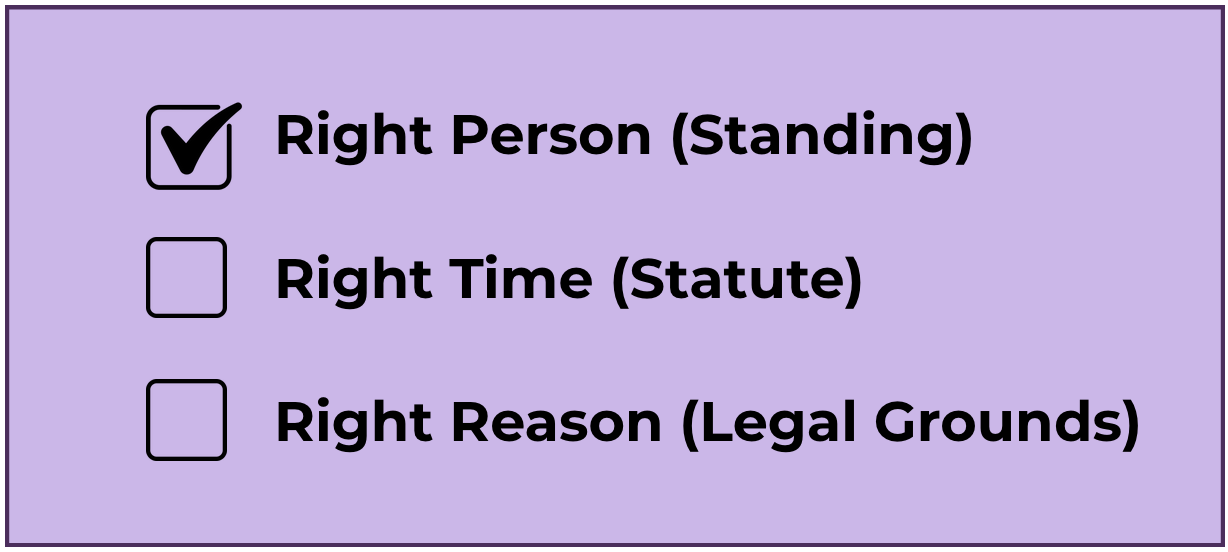
If you are a self-represented litigant, guessing at your legal strategy is the fastest way to get your case dismissed and lose your filing fees. Standing is just the first hurdle. To successfully bring a case, you have to satisfy what I call the Three Requirements:
- The Right Person: Proving your legal standing.
- The Right Time: Filing within the strict statute of limitations.
- The Right Reason: Grounding your petition in a legally recognized cause of action.
Watch: Who Can Challenge a Will?
Don’t let the opposing side’s lawyer scare you out of court with terms like "jurisdiction" or "lack of standing." But at the same time, don't blindly file paperwork without knowing if you pass the gatekeeper test.
To help you evaluate your own situation, I created a free quiz that covers the three requirements I had to meet before moving forward with my case.
➡️ Take the Free Quiz: Do I Have a Probate Case?
Once you complete the quiz, you'll also receive my Free Evidence Checklist sent straight to your inbox to help you start organizing your documents the right way.
Note: This article reflects my personal experience navigating California probate litigation and is provided for educational purposes only.